Design Process
Black Witch’s Grimoire is the first TTRPG I made from the ground up on my own. The game began as an exploration of trauma through magic and evolved into a much larger narrative about abuse, control, and healing. It was also an exercise in teaching and directing satisfying creative writing through game mechanics.
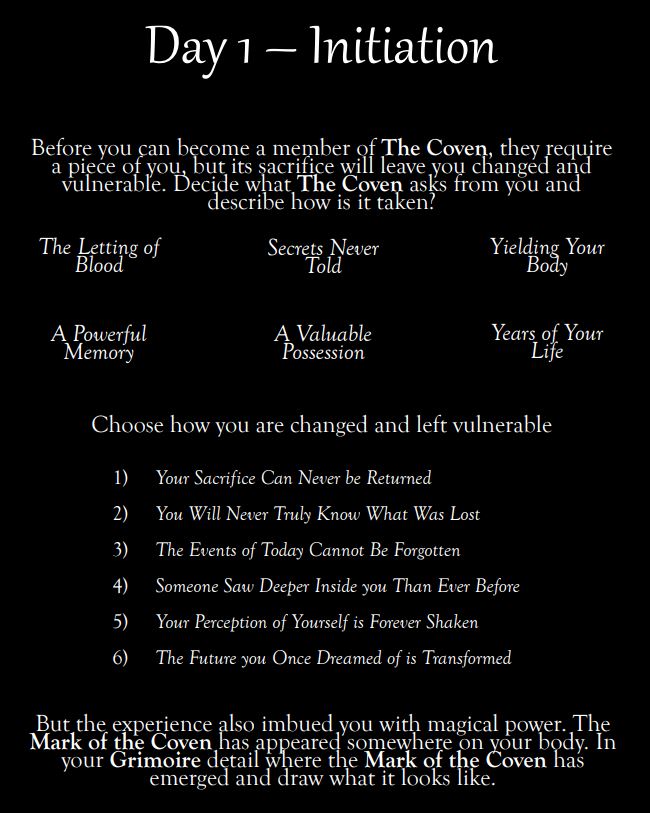
The game is intended to be played over 7 days. While there is no strict rule enforcing this it gives players who are new to fiction writing time to spend on the game without asking for a multi-hour writing session which can be intensive even for experienced writers. This gap also gives time for players to think about the events of each journal entry and the characters involved in it.
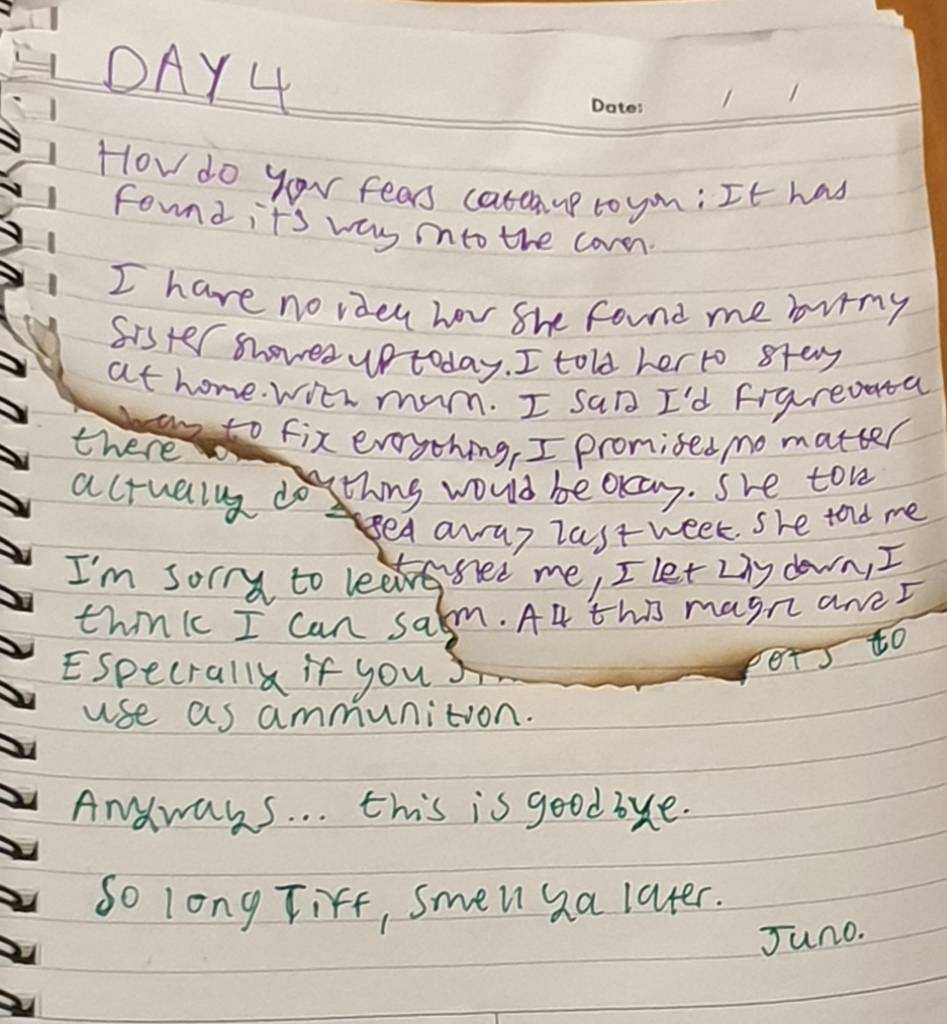
Each day involves two distinctly designed phases. The first sets the situation of the day for the player and lets them choose from a set of prompts to decide what happens and how it affects their character. The second is a meta task involving the world outside the journal. These can include drawing or extra writing in the journal but can go as far as burning journal pages and brewing potions in your kitchen.
An important and complicated part of making this game was ensuring the correct themes and emotional journey is conveyed to the player without forcing them down a linear story. If I made the game too open-ended then the player’s story could become incoherent and contradictory to the events of following days. However, if it controls the player’s actions too much then there’s no point in it being a TTRPG and may as well be a pre-written novel or short story.
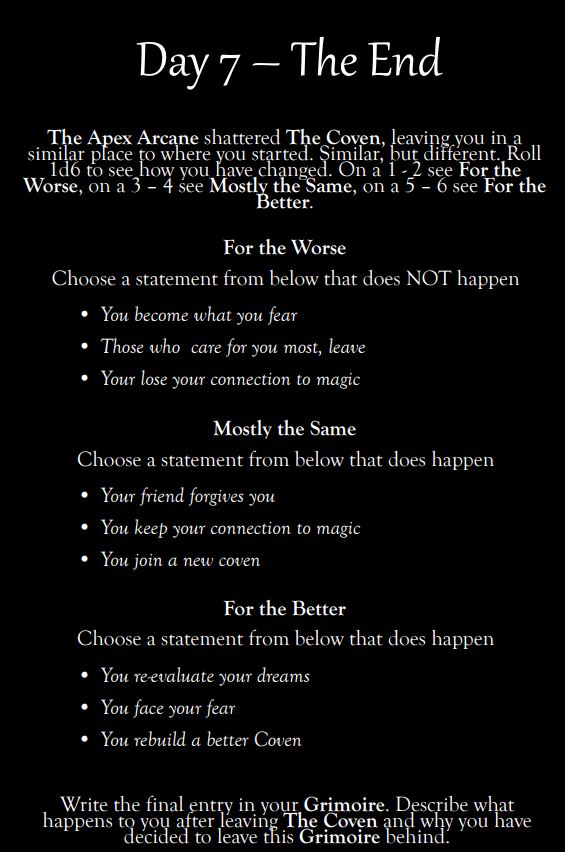
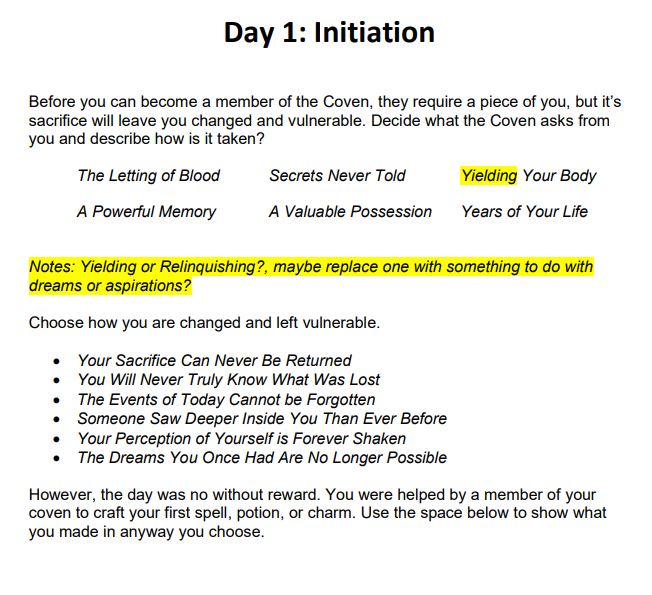
Through playtesting the Day 1 page I learnt that the game’s themes needed to be bound to the player character during character creation. While defining the game’s setting and NPCs was an important part of this, the most important part was defining the player character’s fears and dreams. Through the options I present, a traumatic past and potential future for the player character is defined. Giving the player a direction to head towards and away from with their character. From here it was far easier for the daily pages to direct the flow of the story and define the challenges the player character faces.
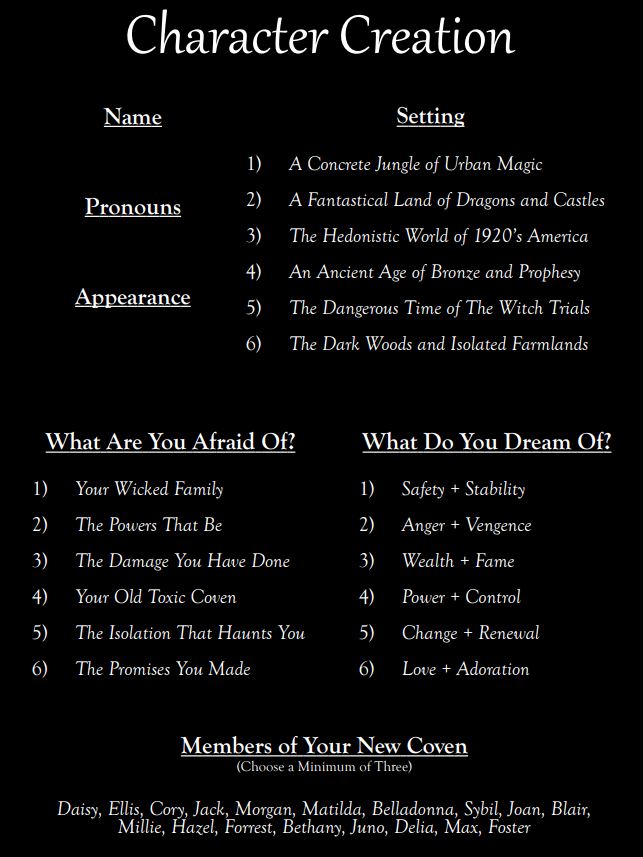
The final element of the player’s journey was also one of the most complicated to design. The game thus far had allowed the player a lot of freedom in deciding what happens to their character, however, the ending involved far more forces than a single player-character could control. I wanted to represent this lack of control and our inability to know our own future in the game’s mechanics. To do this I break the structure of the rest of the game and tell the player to roll a dice which will decide the fate of their character.
The d6 is split into thirds with each third representing a potential future: one negative, one stagnant, and one positive. While all three outcomes ask the player to choose an element of what happens to their character the way they decide and their options are crucial to providing a coherent and satisfying end to the game’s narrative and themes. In the negative out-come the player can choose one thing that DOES NOT happen, representing an inability to save all the things you want to. The stagnant and positive allow the player to pick one thing that does happen, representing the choice of a new path forward rather than a focus on the present and past in the negative outcome. Finally, the stagnant options turn the player back to the start of the game repeating the same cycle of recovery in the game whereas the positive ending creates an entirely new future showing that the character has, at least somewhat, healed from their trauma over the course of the game.
Game Documentation
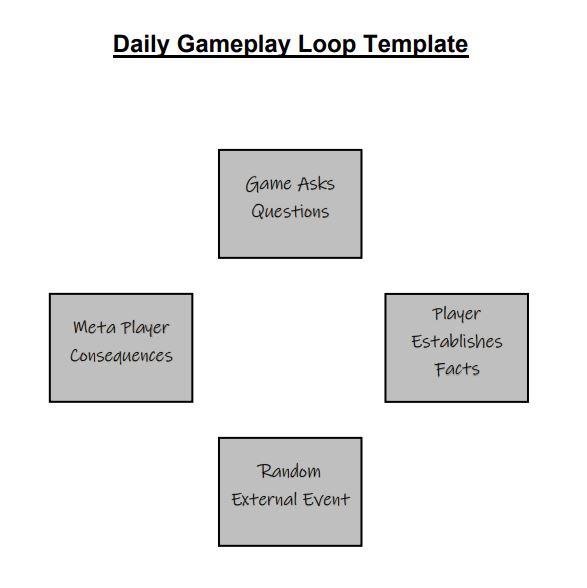
As Black Witch’s Grimoire was a TTRPG its core design documents also evolved into prototypes of the game’s systems and gameplay loops. The images above show these in action but below you can see initial planning and prototypes (highlights are elements that I was unhappy with and changed for the final version).


My Strengths & Lessons Learnt
Black Witch’s Grimoire lent into two of my strengths as a designer while allowing me to develop them further. First I was able to explore and expand my understanding of story components. Through mechanics like the pick lists I was able to find multiple different ways of reaching the same points in a story while still having wildly different ways of reaching there, ensuring the game had a strong replay value. The second area was my understanding and application of player interpretation. The game was read through multiple times by many different people and each time the specific wording I used to avoid or encourage particular interpretations of instructions. This also led to some of the wordings being interpreted in ways I never expected but fit with the game and so I adjusted other areas to accommodate for it.
The main flaw in this game and the main one I learnt was about readability and graphics design. While the content is something I’m really proud of its hindered by its presentation in the pdf. Mechanically this was also a game built on playtesting and it really highlights the importance of that for me even in narrative games which traditionally would have less playtesting than more mechanically intensive games.
 Portfolio | Daniel Cox